Saturday, 30 August 2014

Top Ten Tips for College

Moving away from home for the first time is no easy feat and the transition from school to college life can be a tricky one; even for the most confident, self-assured students. Starting a new university, moving into a new house and living with random people is a big change and many first year students experience loneliness, stress and anxiety when they first leave the comfort of their home. However once you get your bearings and find your feet you will soon realise how much university has to offer.  Undoubtedly college years are the best years of your life; a time to seize opportunities, socialise, make lifelong friendships and work hard for your dream job. Here are my top ten tips for making the most of the best four years of your life!


The best way to make new friends!
Get Involved 
College life is not just about academia and extends a lot farther than the lecture halls and classroom walls. During the first few weeks everyone is in the same boat; no one knows anyone and everybody is looking to make new friends and just have the craic. Clubs and societies are a huge part of college life and most universities have an abundance of clubs and socs to choose from. Throw yourself into everything during the first few weeks, join clubs that suit your interests and hobbies or, instead, learn new skills. Fresher’s week will also be jam packed with activities including UV nights and silent discos so make the most of everything thrown your way.

Mind yourself
Looking after number one in college is harder than you might think. There is no mammy looking after you, ensuring you’re eating all your vegetables and getting eight hours sleep every night. Do yourself a favour from the get go and start as you mean to go on. It is all too easy to slip into bad habits in college and before you know it you think eating leftover pizza for breakfast is acceptable. It’s not and never will be. Most colleges have gym and sports membership you can avail of at a student discount so make the most of what’s on your own doorstep. Try to get enough sleep and eat healthy as well. Your body will thank you for it.

Orientation
Getting lost is inevitable but orientation will help!
A must do for all incoming first year students. Orientation usually occurs a week or so before college
officially starts and it gives students the chance to take in their new surroundings and familiarise themselves with their new home for the next few years. Orientation guides are on hand to help with any questions or difficulties you may have so don’t be afraid to ask, no matter how silly you think your question is. Do your best to attend all the events going on throughout orientation week and utilise the free offers of pens, notebooks and food.

Plagiarism
For anyone who might not know, plagiarism, in its simplest form, is copying someone else’s work and claiming it as your own. From the moment you step into a lecture hall your teachers and tutors will warn you against it. Please take heed of what they’re telling you and never, ever try it, no matter how under pressure or caught for time you may be. Lecturers will spot it a mile off and will feel no remorse awarding you an “NG” or “F” grade.

Travel
One of the most exciting opportunities college presents you with is the chance to travel and explore the world. A lot of courses require students to take up an Erasmus or study abroad semester. An increasing number of students are readily availing of student summer visas to the States, while other students are taking up TEFL (Teaching English as a Foreign Language) in countries such as Thailand, Japan and China. Your college years are the perfect time to be selfish, so say yes to new opportunities and experiences. It is only the things you don’t do that you will end up regretting.

Attendance
In the midst of socialising, joining new clubs and societies and making new friends, it is easy to forget the real reason you’re in college. While going to that 9am lecture might not seem too appealing make an effort to attend and keep on top of your assignments. Slacking off lectures and tutorials and constantly playing catch-up is no fun and just makes life a whole lot harder for you.

Budget
Learning to budget your money is one of the hardest things you will learn during the first semester of college. The first few weeks are always the most expensive and, for many people, it is the first time they are in control of their own finances. No one wants to be living off toast and beans by the end of every week/month so do your best to budget your money. It makes life that little bit easier, trust me.


Buying books
Speaking of budgeting…buying books second hand, or not buying them at all, is one of the best tips I can give in relation to saving money. University textbooks cost a small fortune so, if the book is a must have, then go to the Students’ Union and see if you can get it second hand. Chances are there will be previous students only dying to get rid of it. Now, some lecturers will tell you that certain books are compulsory and you need to have them, but this is not always true. If you can source the book out in the library or find extracts of it online then you might get away with not buying it at all and save yourself a few extra dollars.

Trying new thing
There is no time like the present and no better place than university to try out something you’ve been putting on the long finger. College is where you find out what really makes you tick so seize the moment, experiment with new ideas and discover who you really are.

Home sweet home
Just as it is a huge change for you, it is also a huge milestone for your parents. Don’t forget to check in with them and let them know how you’re getting on and what you’re up to. No one worries more about you than your mam and dad so keep them in the loop and everyone will be happy. 


Friday, 16 May 2014

The rebirth of Belfast

Once considered one of the four “B’s”, alongside Bosnia, Beirut and Baghdad, as a place to avoid, Belfast has transformed itself beyond recognition. Today Belfast is a prosperous, thriving and successful city. The economy of the city is once again blossoming; new industries are being created and it proudly boasts one of the largest, brightest and most-educated workforces in the world. Investment into regeneration projects in recent years has seen the city of Belfast really come to life. The administrative capital and largest city of Northern Ireland is now one of the most visited cities in the U.K. and second most visited city on the isle of Ireland.
Tourism in the city has seen a huge boost in recent years with attractions such as the Titanic Quarter, Ulster Museum, Belfast City Hall and the Victoria Square shopping centre enticing tourists in their droves.
For anyone visiting the city, Titanic Belfast is a “must-see”. Located in the Titanic Quarter, alongside the historic site of the iconic ship’s construction, Titanic Belfast is the world’s largest Titanic visitor centre. Visitors journey through an interactive exhibition of nine galleries in the exemplary six-floor building and can relive the full story of this world renowned ship; from her conception in Belfast, through her construction, launch, voyage and ultimate fateful end. Tickets are reasonably priced ranging from £7.25 per child and £15.50 per adult. Children under five go free and there are also special discounts available for students, senior citizens and families.
As well as housing Titanic Belfast, the Titanic Quarter also boasts one of the sets of Game of Thrones, where production for seasons one, two and three were filmed. So if you are a Game of Thrones fan and happen to be holidaying in Belfast you are in luck. This summer the Game of Thrones exhibition will take place at the Belfast Waterfront from 11th-15th June. The exhibit, which is free of charge, is designed specifically for fans of the acclaimed TV series, and aims to bring the captivating and magical world of the show to its viewers. This is the second year the exhibit will run in Belfast and, if reviews of last summer are anything to go by, fans are in for an unforgettable experience.

As well as enjoying the sightseeing and cultural attractions Belfast has to offer, if you’re looking to fit in some retail therapy, look no further than the Victoria Square shopping centre. Located in the heart of the city centre, this state-of-the-art shopping complex is home to over 70 stores including Hollister, House of Fraser, River Island and Tommy Hilfiger to name but a few. Opened in March 2008, this is a partly enclosed, partly open air shopping centre, offering customers a vast array of eateries such as an oyster bar, Spanish Tapas bar, McDonalds and O’Briens as well as many coffee shops, cafes and grill bars. If it’s not shopping you crave Victoria Square also has an impressive Odeon cinema, with eight screens, located on the second floor of the shopping centre.

If none of these eateries tickle your fancy then the Golden Mile will sort you out. Starting at Great Victoria Street, it offers a vast array of restaurants, bars, pubs and nightclubs to suit everyone.
For those interested in the history of Belfast and Northern Ireland, the Ulster Museum is the perfect place for you. Like the Titanic experience, this is an interactive museum, designed to showcase the history, art and natural sciences of the North. Entry is free so if you can visit it is definitely worth it.
Another historical attraction worth seeing is Queen’s University. Located in the city, Queen’s University Belfast, was founded by Queen Victoria in 1845 and is the ninth oldest university in the U.K. The Welcome Centre, based at the university, is an ideal spot for tourists as its offers a regular programme of exhibitions and serves as an important information stand for visitors unfamiliar with the area.
If you are holidaying in Belfast for a little bit longer and want to escape the hustle and bustle of the city for a day then a trip to the Giant’s Causeway is the solution. Although it is situated in quite a remote area on the Antrim coastline, it draws in almost three quarters of a million visitors every year to admire its breathtaking landscape.
 Belfast has something to offer everyone and, if you are thinking of making your summer holiday a little more local, then a trip to the North is the perfect answer.
Today Belfast, and Northern Ireland as a whole, is a far cry from the troubled and conflict-ridden area it once was. Today the people of Belfast are discovering pride in their country. They have found a new cultural vitality and optimism and are eager to share it with the rest of the world. Today they are confidently looking forward to building a future together.

Tuesday, 15 April 2014

Glasgow: Scotland's second city has just as much to offer

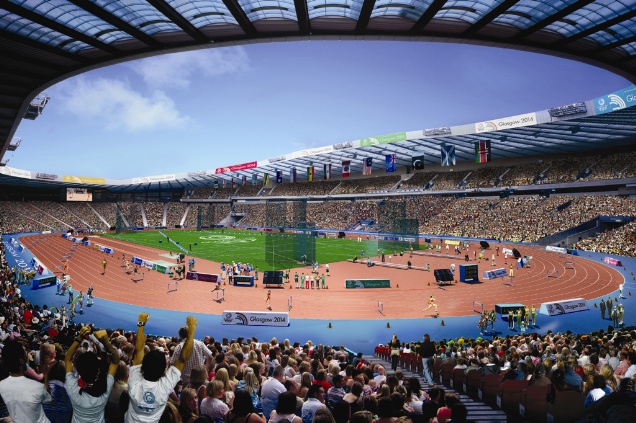
Scotland’s second city was given a welcome boost at the beginning of the year when it was named one of the top tourism destinations on the planet for 2014. Now preparations are well underway as the city of Glasgow gears up to host one of the world’s biggest sporting celebrations, as well as one of the most anticipated music events in the industry later on this year.  

According to Rough Guides, one of the world’s leading travel guidebooks, Glasgow is rated as one of the must-see cities of 2014. This may be partly due to the fact that the renowned Commonwealth Games will take place within the city this summer. The Games will run from 23rd July until 3rd August and, according to the official website of the Commonwealth Games, the event has been described as “A Cultural Celebration for all of Scotland”. The Games will highlight the city’s extensive sporting and events infrastructure and it is hoped that they will provide a boost to the city’s tourism industry and, in doing so, pave the way for more cultural events throughout the year. 

As well as the Commonwealth Games, the arrival of the £125 million SSE Hydro arena in Glasgow last year has helped accelerate the city’s growing status as a “cultural powerhouse”, as stated in Rough Guides. This year will see the arena host the opening gala for the Ryder Cup golf tournament in September, as well as the 20th annual MTV Europe Music Awards in November.   

If sporting or music events aren’t really your thing then don’t dismiss Glasgow just yet. This modern European city has an abundance of attractions sure to entice any visitor including its arts and culture, vast array of restaurants and bars, excellent shopping facilities and must-do bus tours. 


If art and culture rouse your interest then the outstanding Kelvingrove Art Gallery and Museum, located in the Bohemian West-End of the city, offers visitors the chance to view some of the finest art exhibits in Europe for free. During its refurbishment between 2003 and 2006, £28 million was pumped into the museum and it has since become one of the most popular tourist attractions in Glasgow 

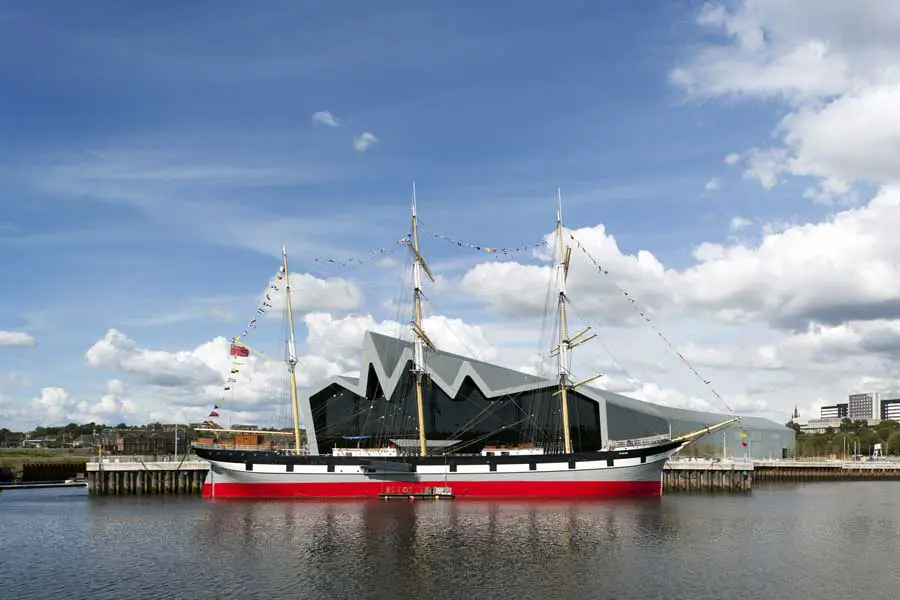
As well as the Kelvingrove Museum, the Riverside Museum, Glasgow’s Museum of Transport, is another must see. Since its opening in June 2011 the museum has gone from strength to strength. It now features over 3,000 exhibits and last year was named the winner of the 2013 European Museum of the Year Award.  

Speaking of transport, Glasgow is one of the most accessible cities and their public transport system is very reliable and easy to use.  Unfortunately the weather is very similar to Ireland and so, open top bus tours are not always a good idea. However, if you get a chance to ride on the hop on/hop off bus tour around the city then take it and embrace it. The tour gives a brief, but excellent, audio guide of the city and some of its main attractions including; George Square, Glasgow Cathedral, Glasgow Science Centre, Botanic Gardens, Kelvingrove, The Royal Concert Hall and many others.     
 
Once all the obligatory sightseeing has been done some retail therapy is most definitely in order, and where better to do it than Glasgow City Centre? The city boasts it’s very own ‘Style Mile’; a square mile in the centre of the city that is home to over 200 shops. Glasgow is home to every fashion style, from designer to vintage and niche to mainstream. The city also boasts top of the range shopping centres including the Buchanan Galleries, St. Enoch’s Centre, House of Fraser and Princes Square. 

Once the shopping and sight-seeing has been done and your belly is beginning to rumble then don’t fear. Like most cities, Glasgow is overflowing with fantastic restaurants, traditional bars, cafes and nightclubs to suit the taste and budget of every visitor. 

So if you're bored of the usual beach holidays or you’re just craving a night or two away, then make the trip across the water as this sassy Scottish city is an ideal destination. 


Tuesday, 4 March 2014

Taking a trip across the water...


Scotland isn’t that far from Ireland. It's just a stone throw away. However, some things haven’t made it across the Irish

Sea yet and since arriving in Bonnie Scotland I’ve figured out there are some questions Irish people just cannot escape from...


The Accent

Yes, I know you love the Irish accent. No, I will not say “thirty three and a third” again.


The Geography

“Oh you’re from Ireland. Do you live in Dublin?”

There are, in fact, 32 counties dotted around Ireland so why do you insist we all come from Dublin? Yes it’s the capital but there is more to Ireland than The Pale.


The Culture

“Can you Irish dance?"


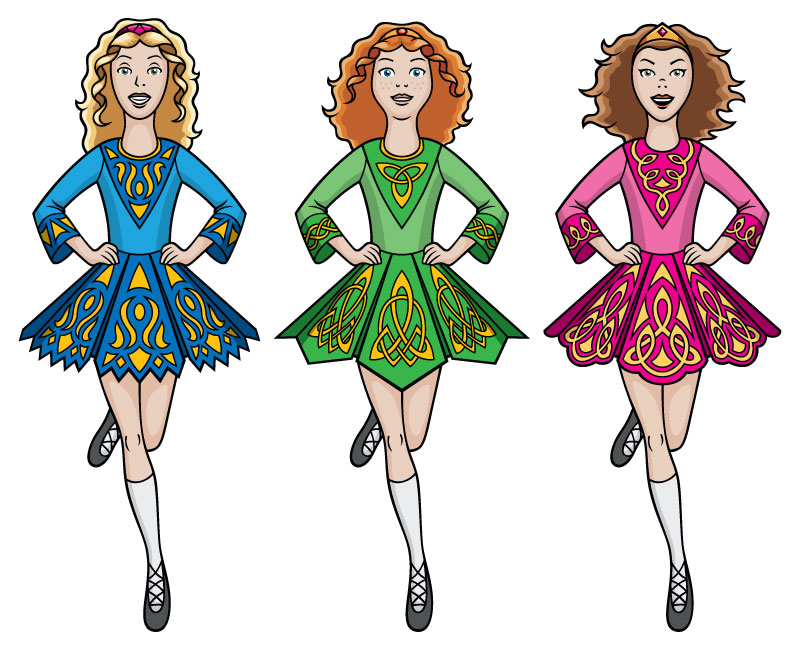
Upon hearing you are from Ireland, this is one of the first questions you are asked. Like all Irish children I learned how to Irish dance when I was about seven years old. This does not make me the female version of Michael Flatley nor does it mean I will perform a rendition of Riverdance for you.


The Language

Slang words like “shifting” and “nagan” have failed to make their way to Scotland. I am met with a blank stare and a queer look when I utter these words. To the Scottish, “shifting” is simply “pulling” and nagan ceases to exist.


The Irish Language

We learned it throughout primary and secondary school yet, unfortunately, the majority of Irish people will struggle to speak what is technically their native language. When asked by anyone outside of Ireland what you can say as Gaeilge the I-learned-this-off-by-heart-when-I-was-in-primary-school “'An bhfuil cead agam dul amach go dtí an leithreas?" is one of the favourites.


Thanks to some advertising genius in Carlsberg if we're feeling brave these few lines can also be heard;

"Agus madra rua! Is maith liom cáca milis.
Agus Sharon Ní Bheoláin.
Tá geansaí orm.
Tá scamaill sa spéir.

Tabhair dom an cáca milis!”


The Alcohol


The presumption that Irish people can be found stumbling along the street, drink in hand, proudly singing The Fields of Athenry, is not as true as you may think. In fact the reality is pretty sobering and might disappoint those who would like us to maintain our stereotypical Irish drinking reputation. Yes, we like to drink and get drunk and have a good time. That doesn’t mean we are raging alcoholics that want to go out every single night of the week.


The Phrase

“Top o’ the mornin’ to ya!”

A phrase no one has actually ever said in Ireland. Yet the very moment you announce your nationality to someone you can be sure they will respond with this phrase. And if they don’t say it, they’re certainly thinking it.


The Leprechauns


Not to burst your bubble or anything but these mythical little creatures are just that. Mythical. Contrary to what you might believe these small fairy folk do not walk around Ireland sprinkling magic dust as they go. Although some of it might not go astray at the moment. Did someone say recession?


The Red Hair

Although the stereotype will say that the majority of Irish people are born with ginger hair and freckles, reality states otherwise. Only 10% of the Irish population actually has red hair. In fact, Scotland has the highest percentage of redheads with almost 13% of the population donning this hair colour. Approximately 40% of the Scottish population carry the recessive redhead gene. Ireland is slightly higher with almost 46% of people carrying the gene.


The Potatoes

We don’t just eat potatoes, despite what you might think. We also eat spuds and poppies too.

Tuesday, 17 September 2013

Tackling the stereotype

He could see the anger building up inside her, like a volcano ready to erupt. Her blood was boiling with rage; the veins in her neck looked ready to pop. Her shouting was growing louder and more frantic by the second. Her words were menacing and threatening. As she advanced towards him her anger reached its pinnacle and she lunged at him, slapping him across the face. He tried to get passed her, tried to walk away, but she wouldn’t let him. Oh no, she wanted him to suffer. And he would.

She caught him again, this time by the back of the head. She pulled him to the floor and he fell, cowering as she continued to punch him over and over again. His plight was not over yet. She carried on hitting him; in the face, in the chest, in the back, anywhere she knew it would hurt. She beat him to the point of exhaustion, until he was gagging and heaving. But she did not stop there. This woman showed no mercy. She grabbed him by the hair, drowned out his screams with her own voice, and demanded an apology from him;

“I’m sorry for upsetting ya,” Tyrone whimpered. Kirsty let go and it was over. Until the next time.

Viewers were shocked when they tuned into Coronation Street and witnessed a manipulative Kirsty violently beating up hapless Tyrone. The storyline, which has been gathering momentum over the past few months, has gripped viewers both here and in the U.K. The soap has successfully tackled the ‘stereotype’ of domestic violence and, in doing so, has raised awareness of the fact that it is not only males who abuse and it is not only females who are victims of abuse. Despite this fact being out there, in the public domain, it still continues to shock, as viewers have seen in the Kirsty, Tyrone scenario.


Unfortunately domestic violence against men is not just confined to soap operas like Coronation Street or Fair City. Just last week newspaper headlines around the world reported on former tennis ace Jennifer Capriati’s alleged abuse and stalking against ex-boyfriend Ivan Brennan Jr. The three-time Grand Slam champion allegedly assaulted her former partner in a Valentines Day domestic incident. Although this episode of domestic abuse was reported, in general, domestic violence against men is ignored and has been deemed the “invisible domestic violence”. While it may be invisible in terms of being acknowledged in the media, the statistics that surround it cannot be ignored. Research carried out in Ireland has shown a 150% increase in domestic abuse against men in the last five years. It also found that two in five of all domestic violence victims are men. The report discovered that 88,000 men in Ireland have been severely abused by a partner at some point in their lives, however only 5% of men have reported this abuse to the Gardaí.

So why has there been an increase in domestic violence against men, and, more importantly, why are they so reluctant to report this abuse to the authorities? There are a number of reasons why female violence has become more dominant in recent years. Changes in drinking patterns, which can lead to more women being arrested for violent conduct outside the home, could account for one reason as to why female violence is suddenly more prevalent. CCTV footage has also contributed significantly in supplying evidence to Gardaí which often shows women participating in violent conduct. Apart from this, men are afraid to seek help when faced with such a situation. The stereotype of domestic violence being an act that is perpetrated by men and experienced by women still exists. Therefore when the tables are turned and the roles are reversed, what happens? Too often men are afraid to speak out for fear of ridicule or for fear that no one will take them seriously. They are embarrassed and ashamed that they are not living up to the so-called alpha male stereotype so they suffer in silence.

More and more initiatives are being set up to help and support male domestic violence victims. Campaigns such as the “She loves me, she loves me not” were set up in the U.K. last month and aim to encourage male victims to speak up and not suffer in silence. Similarly, at home, organisations such as Amen aim to provide assistance and advice to male victims of abuse.


Increased awareness, support groups and campaigns are needed in order to encourage men to stand up and speak out. There is only a certain amount that soap operas can highlight and characters can portray in thirty minutes of television. We need real people, real victims and real stories in order to acknowledge this issue because until we recognise it properly, it will continue to happen. 

Wednesday, 20 June 2012

Don't Stop Believing

At the heart of every community is a sport that has long survived the growing changes of Irish society. It is a sport that defines us as a nation. It is our sport and our entertainment. It joins us together and occasionally pulls us apart. It is of course, Gaelic hurling.

Like so many other Irish people I grew up in a county where hurling is very much to the fore. It is one of the most talked about sports throughout the county of Waterford. The conversation surges through the people like blood through veins. When these people talk about hurling they speak with passion, their eyes light up and you can see clearly the love they hold for this game.

Although hurling is regarded as the dominant sport in the Déise it has not always come with success. The so-called 'Golden Age' of hurling in Waterford began in 1929 and lasted up until 1963. During this period Waterford were honoured with two All-Ireland Senior Hurling Championships, two All-Ireland Minor Hurling Championships, two All-Ireland Junior Hurling Championships, one National Hurling League, five Munster Senior Hurling Championships, two Munster Minor Hurling Championships and three Munster Junior Hurling Championships. Not a bad feat for the Déise boys.

All the signs were there to indicate that the Waterford hurling teams could only improve and grow stronger. However it was not meant to be and the period between 1964 and 1991 remained largely a dark one for Waterford hurling. The team were honoured with only one title during this span of almost 30 years; a Munster Under-21 Hurling Championship.

The early 90's saw a rejuvenation in Waterford hurling, with 1992 being their most successful year in almsot three decades. Three championship cups were lifted that year. The Under-21's excelled, winning both the Munster and All-Ireland titles, while the minors took home Munster glory.

Waterford came close on many occasions in the years that followed but ultimately failed to deliver on the day.

Since 2002 Waterford hurling has become a force to be reckoned with, especially throughout Munster. The seniors claimed Munster final victories in 2002, 2004, 2007 and 2010.

The memories of these Munster final wins will remain embedded in not just mine, but many other supporters minds too. There is nothing quite like seeing The Square in Dungarvan covered in a sea of blue and white jerseys. The support in this county is immense. We might not win as much as Kerry do in football or Kilkenny do in hurling but that doesn't mean we can't celebrate when we do win. "Simply the best" as well as Journey's "Don't Stop Believing" have been adopted as Waterford victory songs and can be heard loud and clear when there is something to sing about.

2008 saw Waterford reach their first All-Ireland final since 1963 and well...we all know what happened. An unstoppable Kilkenny team as well as the pressure of an All-Ireland final took their toll and the Cats ran out clear and easy winners.

While Kilkenny celebrated yet another success, it was a sad day for Waterford hurling. The hype that had been built up around the county quickly evaporated and the bubble quickly burst. The weather seemed to mirror our mood and the following day, as rain pelted down, the Waterford supporters lined out along the quay in the city to welcome home a defeated and deflated team.

Each one of them looked just as dejected as the next. Some had tears in their eyes, whil others had their eyes firmly on the ground, unable to make contact at the mass of supporters they felt they had left down. But they hadn't let us down. We were proud of their achievements, proud they had made it to an All-Ireland final and proud they had done their best.

Since then the Déise lads have bounced back and 2010 saw them put yet another championship title to their name. Last Sunday saw them edge out Clare in a highly exciting and tension-fuelled game at Semple Stadium. The defeat against former manager Davy Fitz's beloved Banner county now secures Waterford's place in their fourth consecutive Munster final. Here they will meet the winners of Cork and Tipperary, a match which takes place this weekend. Both teams will provide a challenge to Waterford when they come face to face with either the Rebel county or the Premier county on July 15th.

Will Waterford win? Maybe.
Can Waterford win? Certainly.
I have no doubt that our day will come when we will claim League, Munster and All-Ireland glory. Until then, don't stop believing!

Tuesday, 1 May 2012

A chat with renowned journalist John A. Murphy

I ring the doorbell of his house and wait for a reply. I am nervous. My heart is beating faster than normal and my palms are slightly sweaty. I’ve never met this man before, never spoken to him, but I’ve heard a lot about him. I’ve heard about his outstanding journalistic talent. I’ve heard about his unique way with words. I’ve heard about the stories he has broken down through the years. His name is known all over the country. And with good reason.

He opens his door and warmly welcomes me into his home. For all intents and purposes I am stranger to this man, yet he talks to me as if we are lifelong friends. He leads me into the sitting room and we sit down. His laid-back attitude immediately puts me at ease. My nerves slip away, though not completely. I am still aware of who I am about to interview. He is a man with a very successful journalistic career. A man with a career spanning over 50 years. His name is John A. Murphy.
He begins by telling me about his younger years and his childhood. He describes his school days in Cashel, Co.Tipperary:

“I was a moderate student. I wasn’t great at anything, but I was brilliant at English.”

He recalls a funny story from his school days where his primary school teacher at the time, Brother Dowling, said to him, “you’re going to be a journalist”. John A. remembers how he raced home that evening to his mother and proudly announced that he was going to be a journalist when he grew up. His next question to his mother was; “Mammy, what is a journalist?”

I can see he is a good storyteller from the way he recounts this particular story. His whole face lights up, he speaks with an abundance of energy and humour and I am left laughing and smiling by the time he has finished. Following on from his childhood ambition, John A. says he always knew that journalism was the right career for him.

“I had an intense interest in GAA and a fantastic grasp of the English language,” he says.

He decided to combine the two together in journalism. He reveals that he was “extremely lucky” to break into journalism. He had just moved to Dungarvan, Co. Waterford when the chief reporter of the Dungarvan Observer left and a vacancy opened up for a senior journalist. Deciding to chance his arm he got in touch with the regional newspaper to see what they had to say.

“I’m not a senior journalist but I’m very good,” he told them.

To see if he was as good as he said he was, they sent him home and told him to write a mock news story and a mock sports story of 500 words each. He was true to his word and the following day he accepted the job offer and began working in the Dungarvan Observer.
He remained with the Dungarvan Observer until January 1960 when he accepted a job from the Irish Examiner. It was a job he would pursue for 47 years. In the Examiner he worked on both sports and news stories. He describes himself as “a bit of a freak” as he was the only journalist in the Examiner who reported in two different sections.

“I was a jack of all trades and a master of none,” he says laughing.

In a career extending over five decades John A., understandably, has a myriad of stories, experience and knowledge to share. When asked about the highlight of his career he declares that it was, “without a doubt”, a work trip to Rome where he met Pope John Paul II. Again his excellent storytelling ability is evident as he recounts the memory. He describes everything so accurately and so precise. He recalls how he made the trip to Rome a few months after the Pope had been to Ireland. Upon meeting the Pope, John A. remembers how nervous he was.

“My knees were knocking,” he says.
He recounts vividly the conversation they shared:
“You didn’t come to Cork when you visited Ireland Holy Father.”
“I didn’t my son. If I come back to Ireland I will come to Cork.”

Having made this promise he then pressed his rosary beads into John A.’s hands. He still has them. The following morning the banner headline of the Examiner read; “Pope pledges to come to Cork” by John A. Murphy. On the other end of the scale there have been days of tragedy that John A. has duly had to report on. Recounting one particular horrific car crash, in the early 1960′s, where three people died, John A says he will “never forget it”.
“I cried at the scene,” he says honestly.

Being actively involved in journalism for over 50 years means John A. has seen the profession go through many changes. ”I’m not certain I’d survive in today’s world of journalism,” he says. ”It has changed in a major way.”
Speaking about the decline of print journalism and the move to online journalism, John A. has a very clear opinion:

“Weekly newspaper sales, national and regional, are dropping like a ton of bricks. I see, in a decade or less, a lot of newspapers will have gone to the wall.”

Talking about the job itself John A. describes it as a “tough enough profession”. The biggest difficulty is getting into it, the vacancies are just not there, he says. Despite it being a difficult and often demanding job, he says it is a job that offers huge variation:
“No two days are the same,” he says.

His charismatic and outgoing personality are also well suited to his role as a journalist:
“I love meeting people,” he says.

He describes the difficulty of covering stories he does not agree with. He emphasises the fact that you must never allow your own personal feelings to intervene. “Factually and fairly” is an essential requirement to writing a good story he says.

Last year John A. was honoured with a surprise ‘This Is Your Life’ ceremony. The event, which was held in Dungarvan’s Town Hall and organised primarily by his family, was a celebration of the many achievements of John A.’s outstanding career in both journalism and GAA administration.
His daughter Sharon expresses her views on the occasion:

“It was a fantastic night. The admiration and respect that came from friends and colleagues we interviewed could not make you anything but proud. That night was a tribute to the great journalist, friend and Dad that he is. It will live long in all our memories.”

Similarly his other daughter Jackie reveals how the night was “special” as “it gave us an insight into how well-respected he is and the high esteem in which he is held. Sometimes when you’re part of it all your life you don’t see it.”

Away from his family John A. is highly spoken of among his work colleagues. WLR-fm’s GAA Commentator, Kieran O’Connor, with whom John A. has worked closely with has this to say:

“He is an unbelievable talent as a journalist. He has a great personality and character and a great knowledge of a wide range of subjects.”

Before I wrap up my interview with John A. and depart his house, he leaves me with some valuable advice:

“Listen to all the people that matter Rebecca. It will be to your benefit. Never reach a place where you think you know it all”.