Wednesday, 8 October 2014

Improving slowly but surely...

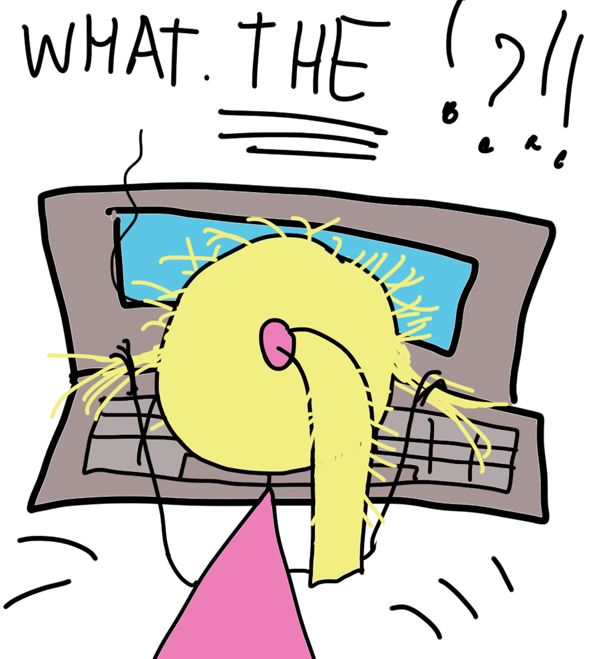
Just a few weeks ago I dedicated a whole blog post to my lack of Indesign skills and expertise. Anyone who read that post would know how much I despised the software, how inept it made me feel and how much I was longing to be free from ever looking at it again.

Then something inside me snapped and I decided I had to practice and I had to make myself better at it. It may never be a love of mine but for the sake of experience and (hopefully) a decent mark in my exam, I needed to practice.


After a few long, tedious and, at times, hair-pulling hours I began to improve. I didn’t panic as much when the picture box didn’t fit. I didn’t give a loud, exasperated and dramatic sigh when the headline was wrong. No. I copped myself on and I asked for help. My classmates, Amy and Lorna, who were both in the same boat as me, were on hand to help and so we gradually got our bearings with the software. I have realised that not panicking is one of the most important things when it comes to Indesign. In fact, it’s the worst thing you could do. Do the opposite. Play around with the tools and figure out what’s what.


Now, I’m not saying I’m ever going to master Indesign but I feel I’m improving slowly but surely. Today’s class was really good and I feel I benefited from it a lot. Although Photoshop goes over my head a bit, I decided to concentrate on my Indesign page. After seeing it as a PDF format I knew I had some changes to make to it and so I concentrated on those for the majority of the class.


I feel that with a couple more hours of practice I will be able to navigate my way around the software and be as ready as I can be for the lab assessment. Wish me luck!

Monday, 6 October 2014

Best of Both Worlds in Lovely Lisbon

As dilemmas go, it can be a tough one. For couples with opposing opinions on what a relaxing holiday should entail, choosing between a city break or a beach break is a tricky question. In the end our destination turned out to be the perfect compromise between culture and sun, activity and relaxation. Lisbon offers all the delights you’d expect of Portugal’s star attraction and strikes the perfect balance.

Like other cities, Lisbon is a hive of activity. The city is a flurry of activity and commotion and ensures that there is something for everyone. The city is easily accessible on foot but can also be explored through the cities affordable public transport system. The Lisbon Sightseeing hop on/hop off bus tour is a must do for anyone interested in capturing all the city’s most popular attractions in one open bus ride. The tour offers brief, but excellent, audio guide of the capital as it roams through different parts of the city.


We start our tour right in the heart of Lisbon at the Marques de Pombal Square where we first take in the modern side of Lisbon and the Baixa district, before delving back in time to some of the oldest most historical attractions such as the Se Cathedral and the Castelo de Sao Jorge, which overlooks the Portuguese capital from one of its highest points.

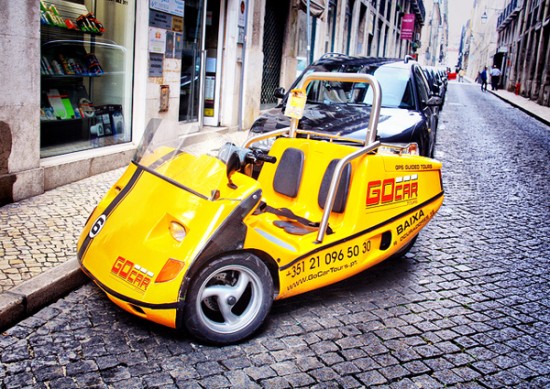
Included in the hop on/hop off bus tour is the option to explore the city in a totally different way; the GoCar. Voted one of the coolest inventions by Time magazine in 2004, the GoCar is a funky, yellow, mini convertible that takes you on a tour around the city while you drive. The GPS guided storytelling car takes you on an unforgettable journey around the city, through narrow alleyways and winding backroads, all the way into the heart of Lisbon and the hustle and bustle of city life. Renting out one of these cars allows you to see Lisbon as you want to and how you want to. You’re free to stop and start whenever and wherever you want. Although it was slightly stressful, it was also one of the funniest and exciting experiences I had while in the capital.

Once the sightseeing is done and dusted and you’re craving some tan time on the beach then the popular resorts of Estoril and Cascais are for you. The Mediterranean climate guarantees warm and blue skies for most of the year. The hottest summer months can reach blistering temperatures of 30 degrees and over, while even the winter months remain relatively mild compared to our harsh winters here. The average low winter temperature in Lisbon stands at 9.3 degrees making it a year round destination.

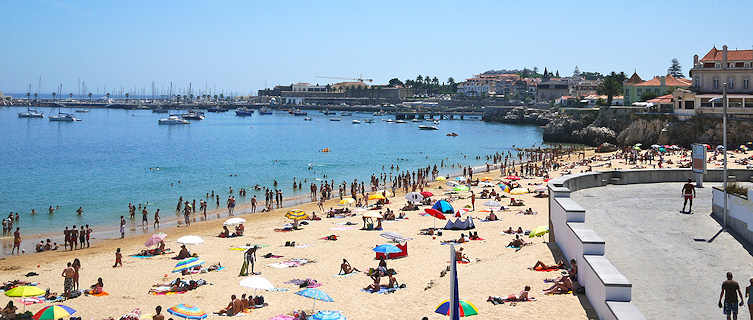
The Cais de Sodre train from Lisbon’s city centre will take you all the way to Estoril, in just over 20 minutes, where you can then hop off and walk the rest of the way to Cascais. The two beach towns are joined together by a promenade and so it’s just a quick walk from one area to the next. Both resorts look like a picture off a postcard with their warm sandy beaches that extend for miles and the glistening turquoise seawater. Estoril remains the quieter of the two while Cascais has more of a buzz about it with water sports activities taking place throughout the day and a range of small bars, restaurants and shops to choose from.

For the foody in you the Portuguese cuisine scene is largely dominated by seafood, although if that’s not your thing then there’s still plenty to choose from on the menu. One word of advice; in every restaurant we visited we were given a plate of bread and olives with our starter without us asking for it. This is added to the bill at the end of the meal so if you don’t like olives or simply don’t want it then just ask them to take it back. Sunday is also a bad restaurant day as a lot of places are closed so just make sure to plan accordingly.

So, if it’s beach time you’re hankering after, but your other half is craving a city break then Lisbon is the answer to all of your problems. The capital city strikes the perfect balance between the relaxation of suburban beach life and the rush of city life. Everyone wins.

Monday, 29 September 2014

Gone Girl

Every so often a book comes along that makes me want to tell everyone about it. I want them to feel the same rush I feel when I am engrossed in these spine tingling, page-turning books. I want them to feel the suspense and anticipate what’s going to happen next. I want them to gasp at the unexpected plot twists and become gripped by the thrill of the storyline. I want them to read Gone Girl.


Gillian Flynn’s bestseller is told in two narratives; his and hers. It’s a suspense-filled crime thriller that also looks at the idea that we never really know who we fall in love with.

The story begins with Nick and Amy Dunne’s fifth wedding anniversary. Presents are being wrapped and dinner reservations are being made when Nick’s beautiful wife disappears. Nick quickly becomes the prime suspect when Amy’s friends reveal she was afraid of him. Strange searches on his computer and persistent calls on his mobile phone don’t help Nick’s case, and readers are torn between wondering if he really bumped his wife off or not. Passages from Amy’s diary showcase her as the ultimate perfectionist capable of putting anyone on edge. But who is telling the truth; Amy or Nick?

As the police investigation intensifies and the pressure mounts, all eyes point to Nick; his lies, his odd behaviour and his vague attitude to his wife’s sudden disappearance. Nick hardly qualifies as Husband-of-the-Year but is he really capable of murder? And if he didn’t do it, then what really happened to his wife?

Flynn’s dangerously dark and deeply intelligent writing, along with her trademark psychological insight, makes for a truly gripping thriller. She plays her readers with unreliable narrators resulting in dramatic and disturbing twists in the plot. Her style of writing is so good, so compelling and so thrilling that it really does mess with your mind.

Published in June 2012, Gone Girl is Flynn’s third psychological thriller. It was released much to the delight of fans and critics who were quick to praise the genius of Flynn’s writing. The Independent on Sunday described the book as; “One of the best US literary thriller writers to emerge in recent years…a truly great novel”, while Marie Claire said; “Flynn keeps the accelerator firmly to the floor, ratcheting up the tension with wildly unexpected plot twists, contradictory stories and the tantalising feeling that nothing is as it seems”.

Bought by Reese Witherspoon’s production company, Gone Girl will star Ben Affleck as Nick and English actress Rosamund Pike as Amy. Since the release of the official trailer and some on-screen shots, expectation for Gone Girl has been mounting. If you get a chance to read this spectacular book before the film comes out then do. I promise you won’t regret it!  The highly anticipated film will be released in Irish cinemas this Friday, October 3rd


Wednesday, 24 September 2014

Speed vs Accuracy: The Importance of Getting It Right

According to the Reuters Handbook of Journalism; “Accuracy is at the heart of what we do. It is our job to get it first but it is above all our job to get it right. Accuracy, as well as balance, always takes precedence over speed.”

Unfortunately in the case of author and journalist David Monagan this could not be further from the truth. In one of his regular blog posts for world-renowned media conglomerate Forbes, Monagan made a crucial error that ultimately led to his resignation.

Mistakenly referring to President of Ireland Michael D Higgins as an “acknowledged homosexual” instead of his electoral rival for the position two years prior, David Norris, is an unacceptable inaccuracy and an error which led to, what he described as, a “journalist’s worst nightmare”.

In an age where print media is fast declining and digital and social media platforms are where we now look, it is easy to see how such a blunder could occur by a journalist. However, how such a noticeable and clearly defamatory mistake could be approved for an online platform without so much as a second glance from a second pair of eyes is not so easy to fathom.

Although his mistake was genuine, and taken down from the internet within minutes, it still went viral and the damage was done. How can such a wrong be righted? How can something so defamatory be corrected? It is obvious through Monagan’s very article, published on Independent.ie, that he is truly sorry for allowing such a mistake to occur. The article itself is almost an apology to Michael D Higgins for ever allowing such a fault to appear in his article. His resignation from Forbes is another acknowledgement that he refuses to work within an organisation that doesn’t double-check copy and allows room for such errors to occur. These actions alone show how Monagan has attempted to vindicate himself and his actions.


As regrettable as this incident is, Monagan highlights for us, as aspiring journalists, how imperative it is to double and triple check your work. If he had not been under pressure and in a rush maybe he would have given his work one last crucial glance. However, there is a lot to be learned from Monagan’s experience and the moral of the story is simple; don’t submit your work online, in a newspaper or on radio without making sure everything is in order and your facts are correct.

Tuesday, 23 September 2014

Reuniting with an old friend

It was like maths class all over again. I could never do it properly. Never quite get it right. I tried. But I never grasped it fully.

I thought my days of maths class were over when I started university and they were. I would never have to do algebra or geometry again. I was delighted. However, that was short-lived. Although maths was already long forgotten, it had been replaced with a different class. Indesign. All the same feelings I had about maths in secondary school came flooding back. Those feelings of despair, helplessness and pure and utter frustration. Maths was gone but Indesign was here to stay.

Maybe that comparison is a bit dramatic. Ok, I don’t particularly like Indesign and I never have. I thought when I passed my exam on it in first year that was it. But here we are. It’s like reuniting with a long lost friend. Someone I haven’t seen in a very long time. I’m a bit reluctant. I’m slightly cautious. But I’m willing to sit down, have a coffee and get to know them all over again. And hopefully even better this time.

Although Indesign has never been my thing, this year I am ready and willing to try my very best at improving my skills with it. I may never be brilliant at it, but I’m confident that with a nice bit of practice and patience anything is possible.

This time round I am optimistic and excited about the Limerick Voice. Two years ago I worked as part of the sport and news team. Although it was stressful at times and I felt a lot was demanded from us, it was a great experience. Going into the project this time round I am far more confident than I was in second year. Having completed my Co-op and Erasmus last year I know I have so much to offer the paper and I am really looking forward to it.

Working with the MA students is new to me but I view it as a welcome change and feel we will all work very well together.


Although I have only had one class so far, JM4017 has been great. I know the module will demand a lot of hard work and time but I’m ready and willing to take on the challenge. 

Monday, 22 September 2014

The magic of the GAA

September marks an important month for many people. Children return to primary school, teenagers to secondary and others to college, while some embark for the very first time. For them it is the start of something wonderful. The beginning. For other Irish people, September marks the end of a long year. The GAA year. Those privileged enough to don their county jerseys and step out onto Croke Park’s hallowed grounds know that this is it; the fruition of months, if not years, of hard work, effort and dedication. The culmination. The pinnacle.

Yesterday, Dublin witnessed 82,124 people descend on the capital to see Donegal and Kerry battle it out in both the minor and senior All-Ireland championship finals. Both teams lined out on the pitch with the same aim; to bring the Sam Maguire Cup home. As it turned out it was a victorious Kerry side that emerged claiming the double and writing themselves into the history books.

To sell out a stadium with over 82,00 people for an amateur sport is a pretty big deal. In Ireland, come All-Ireland day it’s the norm. Anyone lucky enough to nab themselves a ticket (because let’s face it, they’re like gold dust) makes the annual pilgrimage to Croke Park to support their team in search of All-Ireland glory.

The buzz on the streets of Dublin before a match is something to behold. You really have to see it to believe it. Stepping into the stadium is even better. The air is electrifying and the crowd is excited. Soaking up that kind of atmosphere is unreal.
That’s one of the things that make GAA so special. There is no money to be made for the players. They are not on ridiculous wages like English Premier League soccer stars. They do it because they love the game, because they're passionate about it, because it’s all they know. For most players and supporters it is a labour of love and many of them go above and beyond the call of duty.
GAA evokes a range of emotions in people, both on and off the field; elation, disappointment, frustration, relief, pride. The last one is, for me, the biggest one and another thing that makes the GAA what it is. As a supporter or as a player, pride is a huge thing. Everyone wants the same thing; to make their club and their county proud.

Growing up in Ireland there’s no escaping GAA. It lies at the heart of every community and has long survived the growing changes of Irish society. Whatever economic or financial troubles we may endure, having an organisation like the GAA is one thing we can always be proud of. It defines us as a nation. It is our sport and our entertainment. It joins us together and, occasionally, pulls us apart. More often than not the conversation in Ireland is not about the recent troubles in Gaza but about the shock defeat of the U21's. The conversation surges through us like blood through veins. When we talk about football we speak with passion, our eyes light up and you can see clearly the love we all hold for this game.


Tuesday, 16 September 2014

It's all in a name...or is it?

Apparently some celebrities just don’t get enough attention, so they name their newborn baby something ridiculous to stand out. Cue Katie Price revealing the name of her one-month-old daughter yesterday; Bunny. Yes. You heard me right. Bunny. Bunny Hayler.


Forgive me for sounding old fashioned here but I think I’ve heard it all. It just seems unimaginable nowadays that Hollywood’s A-List would send their children out into the world with ordinary joe soap names like Tom or Emma. Instead, celebrities have waged a secret war against each other, in an attempt to come up with more and more ridiculous names, all in a bid to sound more outlandish than the last.

Fruit, cereals, colours, weeds, place names and directions have all been made into actual children’s names as celebrities attempt to outdo each other. Kim Kardashian and Kanye West took the biscuit when they named their only daughter North. The duo claimed it was more “inspirational than directional” and their “highest point” together as a couple. Fortunately, for her, North West joins a long list of unorthodox baby names in celeb land including; Blue Ivy, Apple, Coco and Memphis Eve.

But can someone with a name like Bunny or Apple actually be taken seriously in the real world? After all, a name is just a word. However if you look across the business world, there are hundreds of examples of people who have used their name to add value to their brand. Take a look at Donald Trump. His name is famous throughout the world. It is held with such high esteem that he now licenses it out to other businesses across the world in order to add value to their business and brand name, but would a name like Bunny Hayler have the same effect?  You’d have to wonder…

Former UK Apprentice contestant, Katie Hopkins, known for her deliberately controversial views, took to Twitter today to air her thoughts on Katie Price’s choice of name.

“Bunny? BUNNY? Makes sense I guess, given your dad was going at it like a rabbit with all of mums mates,” she wrote, referring to Price’s recent marital problems with her husband.

The controversial comments are nothing new to Hopkins who seems to thrive off the attention. The TV personality came under fire in July 2013 when she appeared on ITV’s This Morning and admitted she judges children on their first names.

Hopkins hit a nerve with presenters Holly Willoughby and Philip Schofield, as well as viewers, when she made controversial comments linking children’s names with social class. She said: “For me, a name is a shortcut of finding out what class that child comes from and makes me ask, 'Do I want my children to play with them?” Katie added more fuel to the fire by listing names she detested like Tyler and Charmaine. "We don't achieve best friend status with Chardonnay," she added.

While many of us dismiss the controversial comments as nothing more than ignorant, snobby and
narrow-minded, Katie Hopkins does force us to re-evaluate our own preconceptions. Do we think less of someone with an unusual name? Do we think we know what kind of background they come from or what their parents are like? Or is there anyone out there who agrees with Katie Hopkins?

We might not like to admit it but maybe Katie Hopkins has a point and maybe we subconsciously judge people on their name or where they’re from or what social class they fall in to. Maybe, deep deep down, Katie Hopkins is right and her outspoken and blunt opinions are what we’re all secretly thinking in private. Maybe.